

Hey friends, Happy Tuesday!
There’s one question I keep getting everywhere.
Should I learn Excel, Power BI, SQL, or Python? And now with AI, do I even need any of them?
And honestly, this is the wrong question.
If you feel lost between all these tools, don’t worry. I just published a new animated-sketch video that walks through the whole thing as one story, and this is the short version.
Because here is the thing nobody tells you. These tools never replaced each other. Each one solves a real pain, and then quietly hands you a bigger one.
Let me walk you through the story.
Excel: the whole job on one laptop
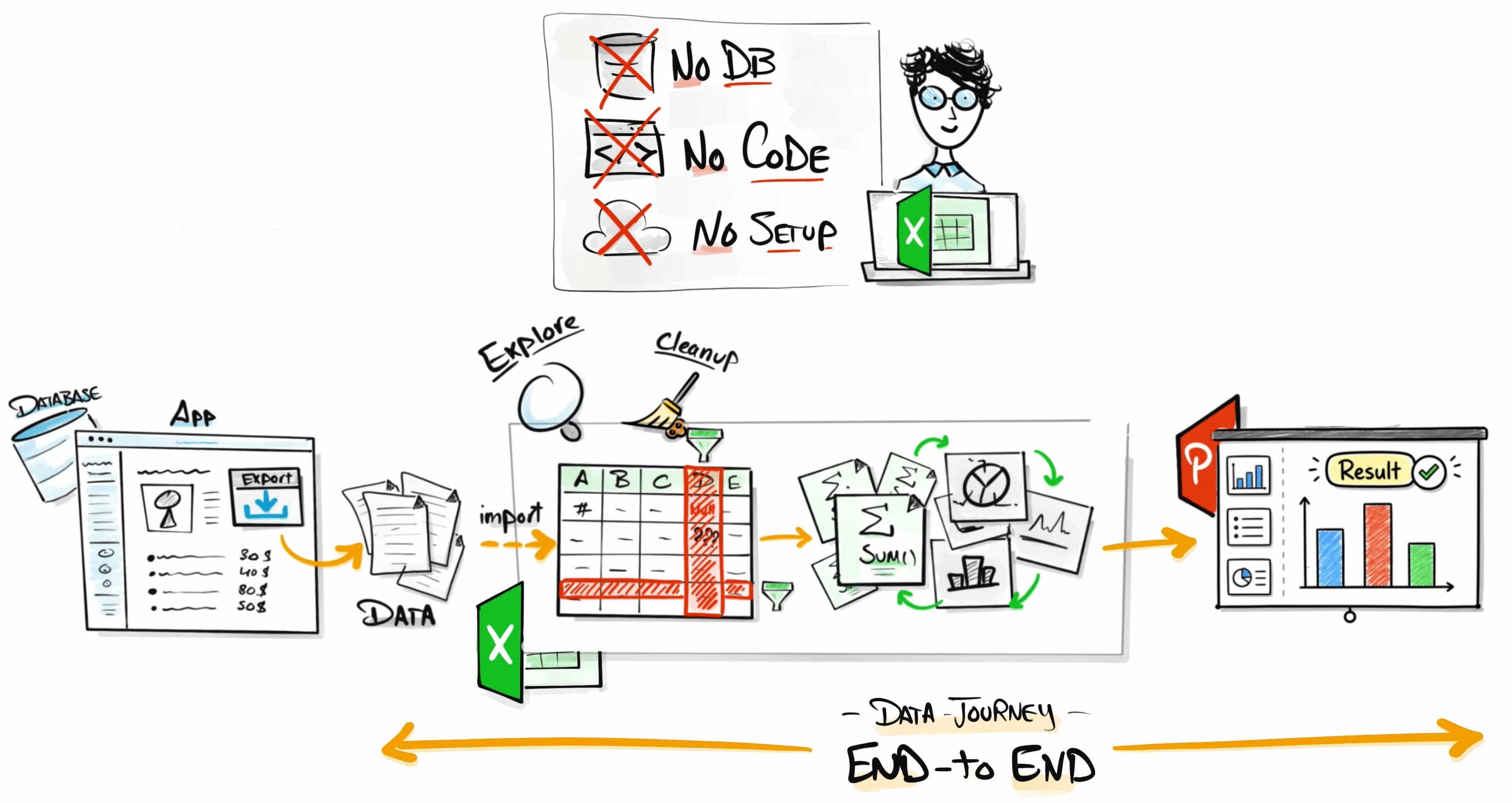
It always starts the same way. A manager has a question, the data sits in some application, and you pull it into Excel. You explore it, clean it, write a few formulas, build a chart, drop it into PowerPoint, and present the answer. Question in the morning, answer by lunch. And honestly, in almost every company there is that one Excel file that quietly runs the whole business, and everyone is scared to touch it.
Why everyone starts here
No setup, no database, no code. Just you and a laptop.
The fastest way to answer a small, quick question.
Anyone can do it, which is why everyone starts here.
Where it falls apart
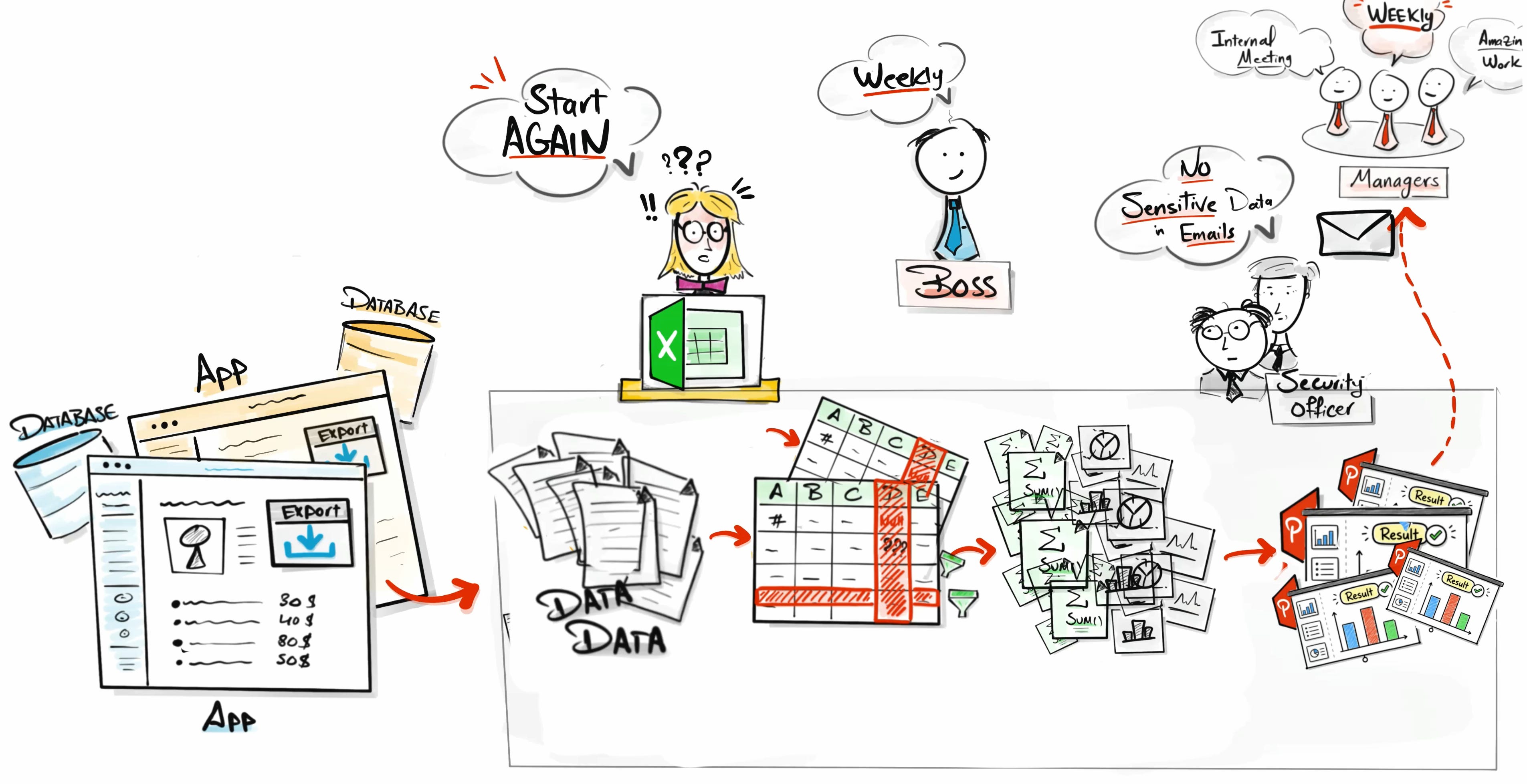
The file grows until it takes minutes to open, and Excel caps out around a million rows.
“Can I get this every week?” turns the whole thing into a manual routine.
You split the file to survive, and now you have sales_final, sales_final_v2, and sales_final_OLD_DO_NOT_USE. Someone is always using the wrong one.
I met people who got stuck for years doing one thing, fighting Excel until it refreshes.
The file grows until it takes minutes to open, and Excel caps out around a million rows.
“Can I get this every week?” turns the whole thing into a manual routine.
You split the file to survive, and now you have sales_final, sales_final_v2, and sales_final_OLD_DO_NOT_USE. Someone is always using the wrong one.
I met people who got stuck for years doing one thing, fighting Excel until it refreshes.
Excel does the whole job alone, but it collapses the moment the data grows.
Power BI: automate it and share it
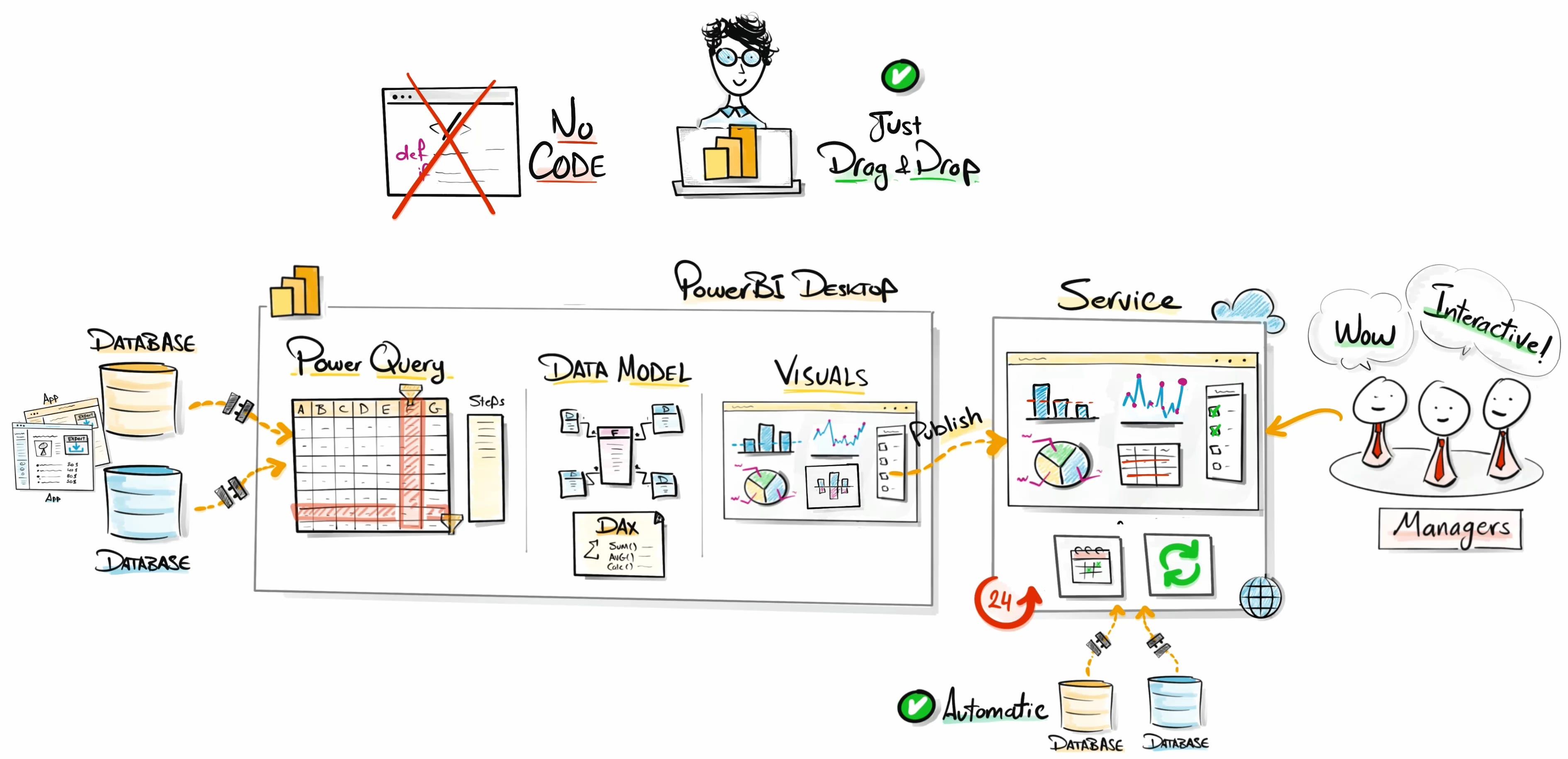
So you move to Power BI. This time you connect straight to the source instead of exporting files. Your cleaning becomes a recipe in Power Query, your calculations become DAX, and on top you get a live dashboard people can click around. You publish it once, it refreshes by itself, and you just share a link.
Why analysts love it
Connect once, refresh automatically, no more weekly nightmare.
The home of dashboards and interactive reports.
All of it without writing a single line of code.
Where it cracks
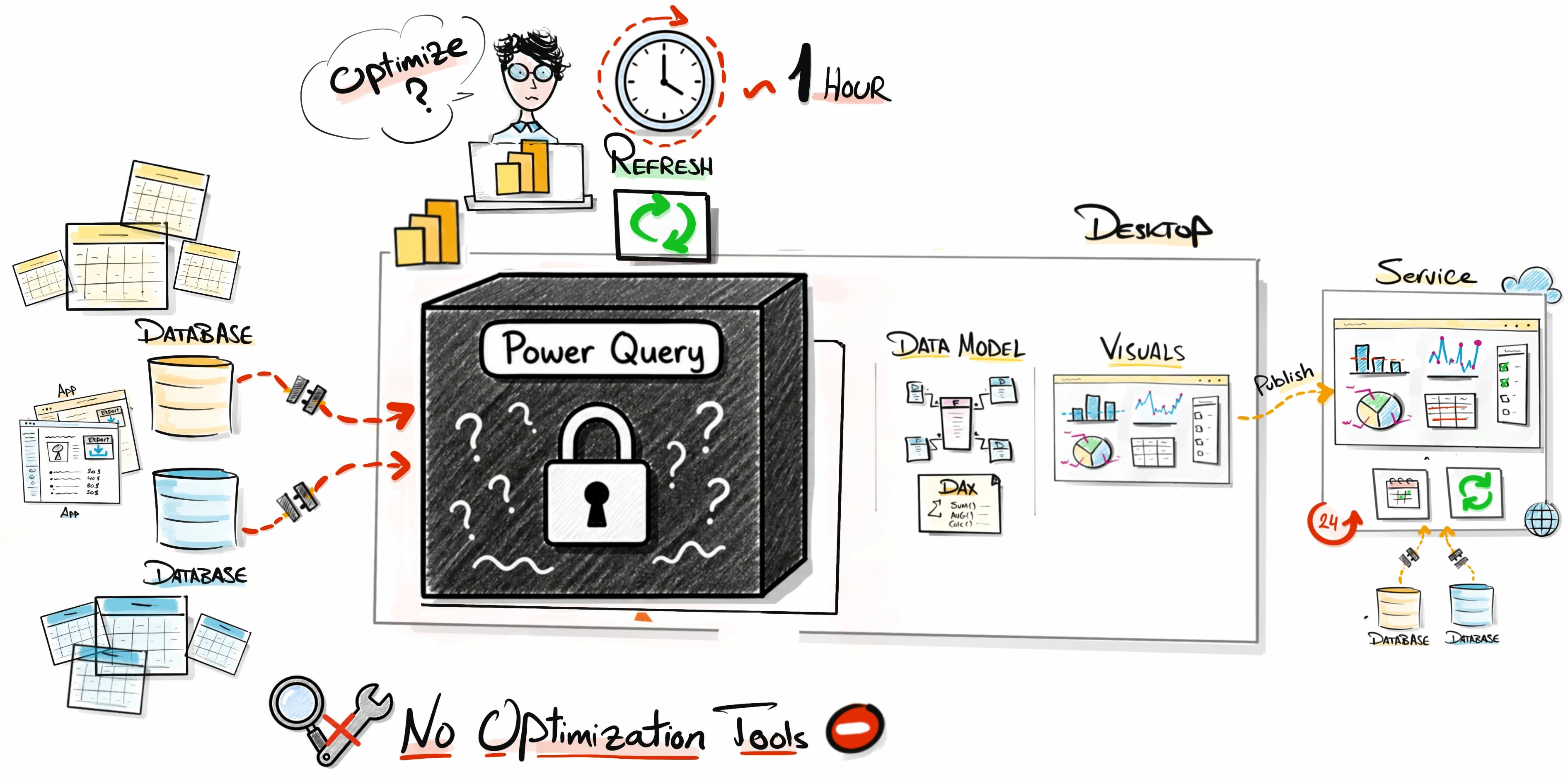
As the data grows, the refresh crawls from a few minutes to over an hour, and Power Query is a black box you can’t really tune.
Every team builds its own report, and the same revenue comes out different in Finance, Sales, and Marketing.
Three numbers in one meeting, and nobody knows which one is real.
Power BI automates the work, but it was never built to be the single source of truth.
SQL: the king of working with data
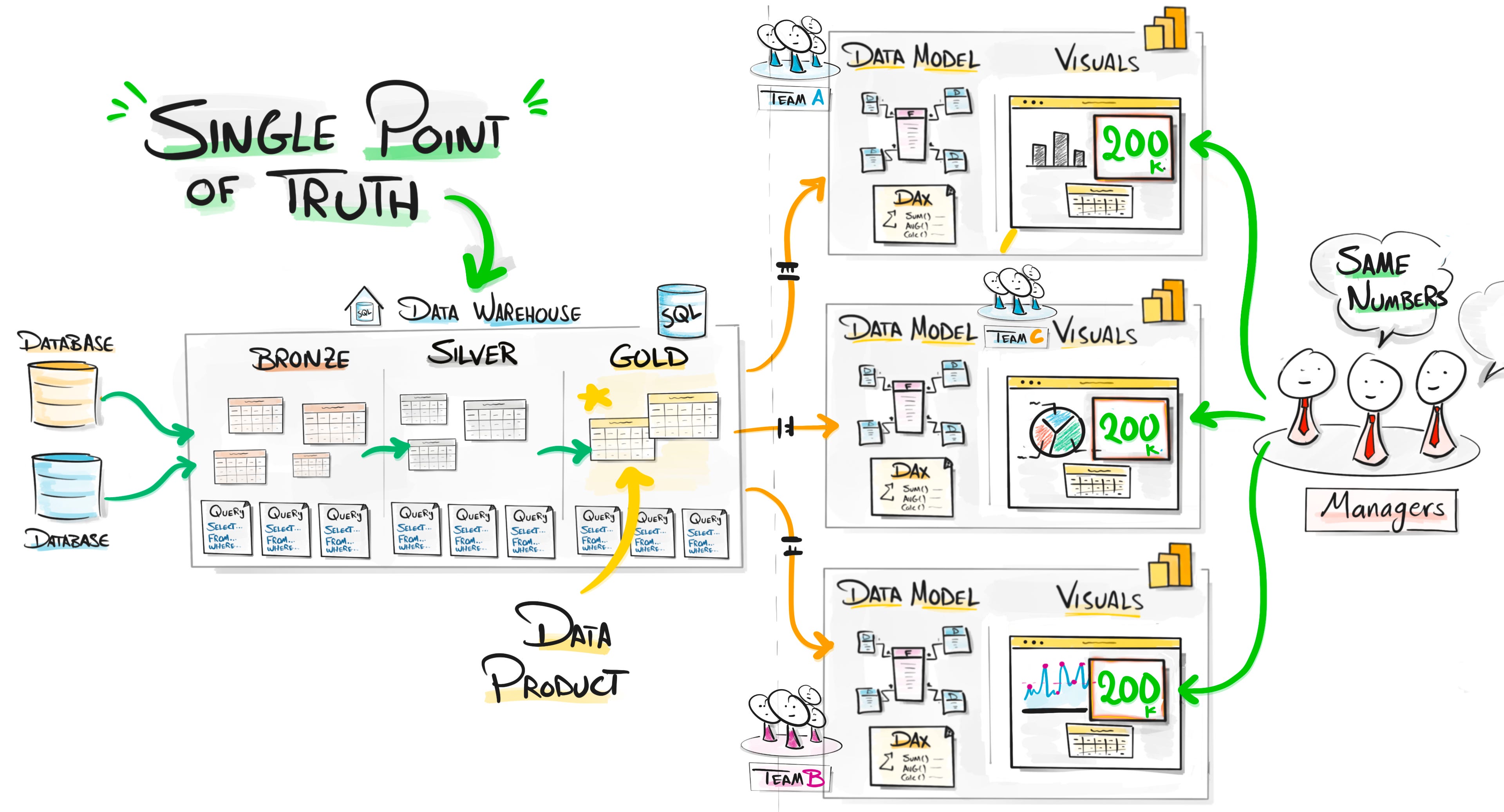
That truth needs to live in one place, a database, the data warehouse. And the language you use to talk to it is SQL. Here is the thing about SQL, it was built for exactly one job, working with data, and that is why it is so good at it. You write your logic once as clean tables and views, organized in layers like bronze, silver, and gold. Power BI stays on top, light, and just reads the final layer. Now everyone walks into the meeting with the same number.
Why it's the king
The best tool for working directly with data. SQL was built for this one job, so it is the simplest and fastest way to transform, reshape, and prepare it.
One shared source of truth, written once and reused by every report and team.
The heavy work runs where the data lives, and you finally have real tools to make it fast, like indexes, better joins, and partitioning.
Want to investigate something? A few lines of SQL and you have the answer, way faster than clicking around in Power BI.
Its one weakness
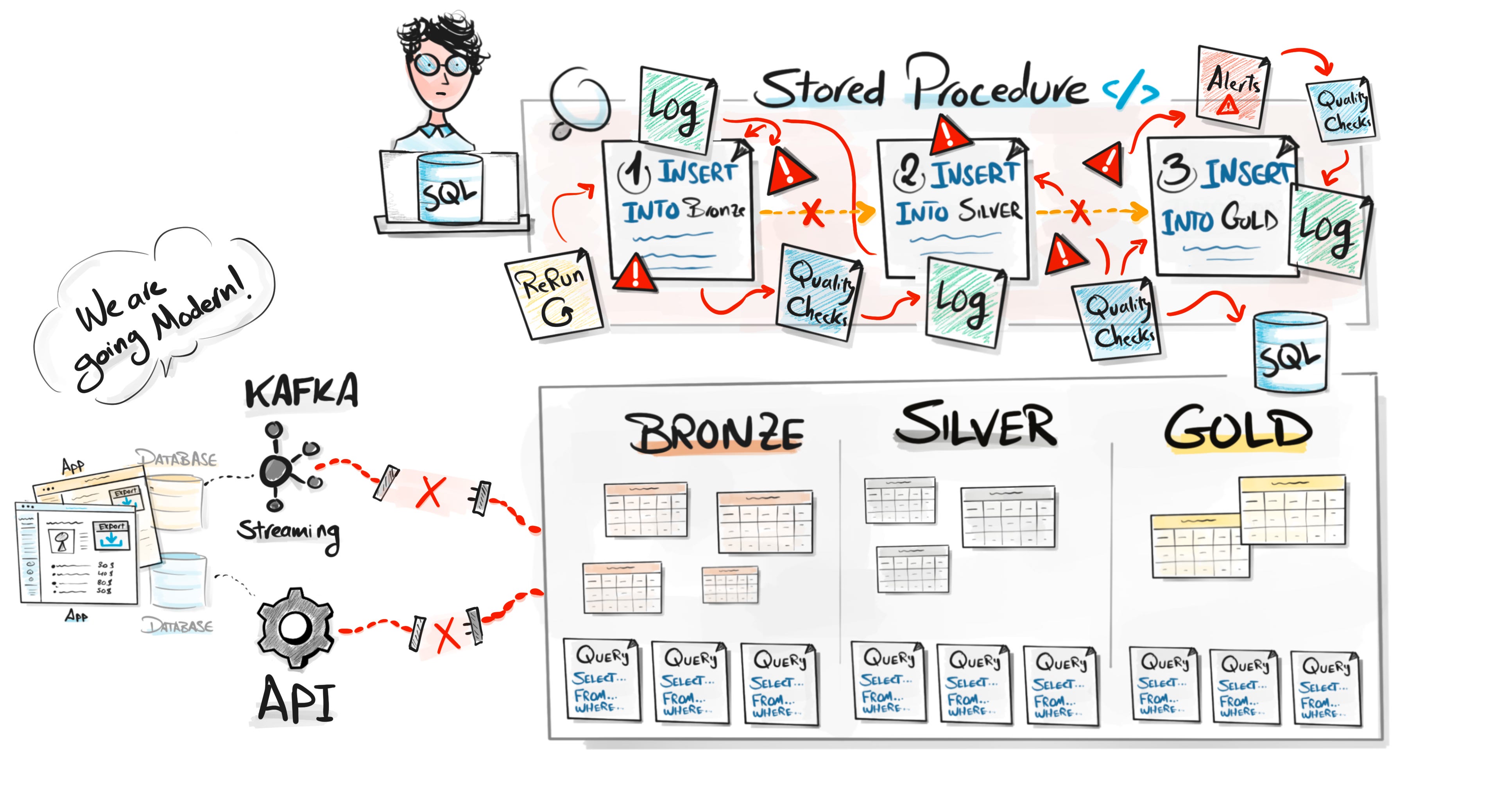
SQL lives inside the walls of the database. It can’t call an API or listen to a stream.
Modern sources keep moving to APIs and streams that SQL can’t reach.
Debugging stored procedures is honestly a nightmare.
SQL is the king inside the database, but the job keeps moving outside its walls.
Python: everything around SQL
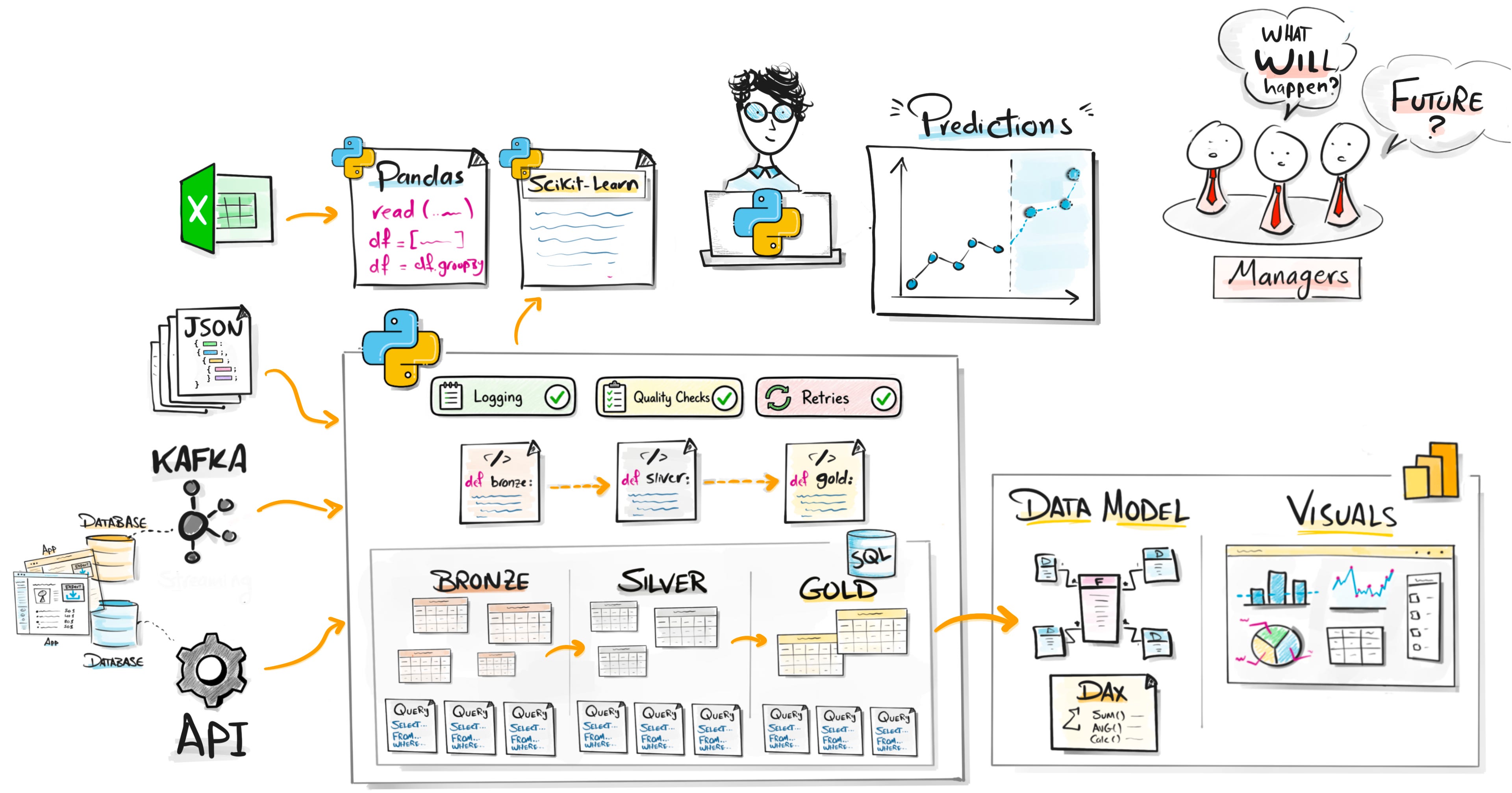
And that is where Python comes in. First, let me kill the biggest fear. Python does not replace SQL. Your SQL keeps doing the heavy lifting. Python just wraps around it and handles everything outside the database, connecting to any source, logging, quality checks, and messy data like JSON. That Excel file a colleague just emailed you? One line of Python, and it sits right next to your database data.
Why it's so powerful
Connect to anything, APIs, streams, files, all in one script.
Automate the full pipeline and add real logging and quality checks.
pandas makes tables easy, and if you already know SQL it feels like home (a groupby is just GROUP BY).
It opens the door to advanced things like forecasting and machine learning.
The trap
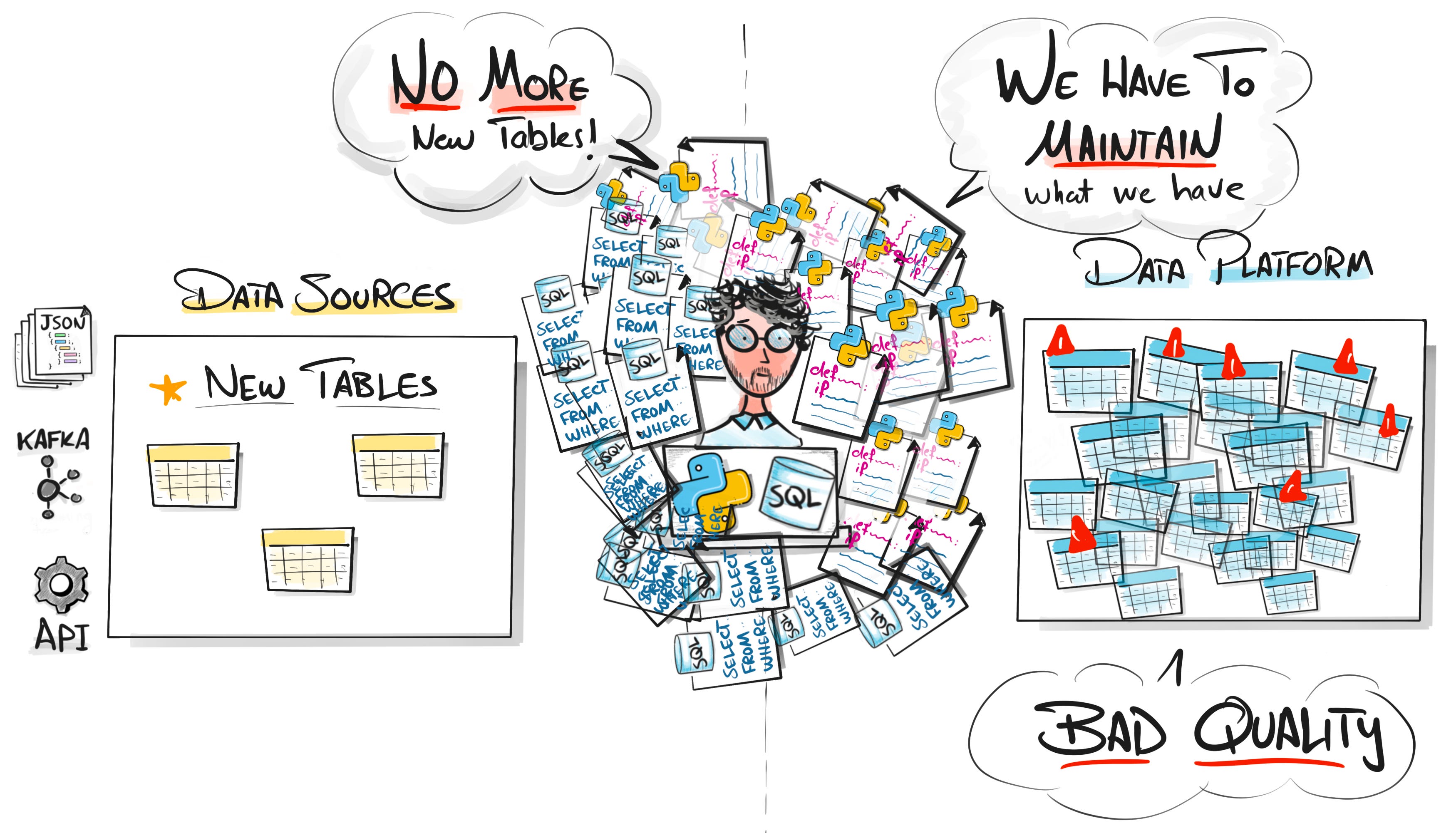
Everything now goes through you. Every new task is new code you write and maintain.
The sources keep growing, and you and your team become the bottleneck.
Your day turns into maintaining pipelines instead of talking to the data.
Python crosses every wall, but now you are the wall.
AI: write the code, go faster
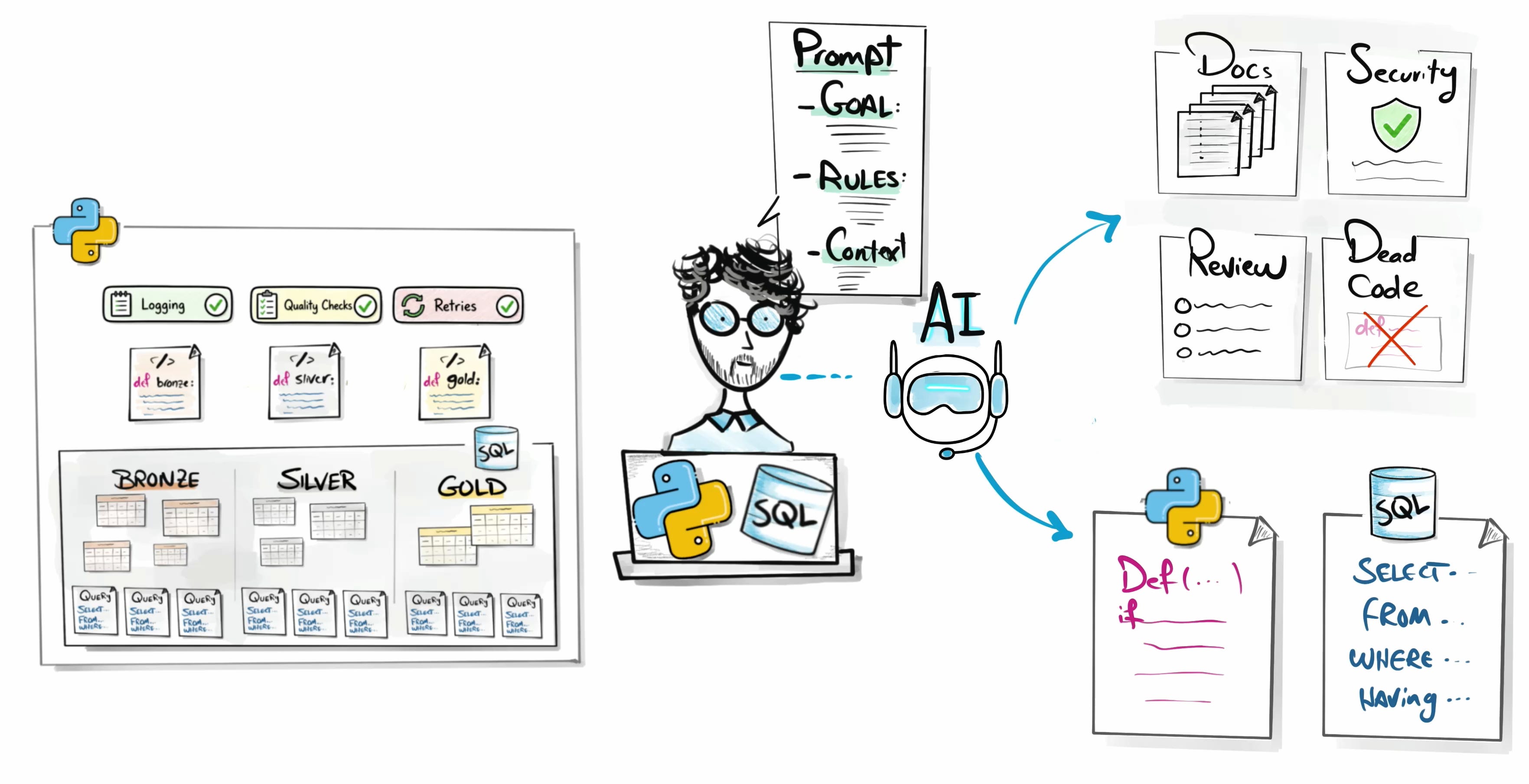
So the manager says we have AI now, let’s use it. And it feels like magic. You describe what you want and the AI writes the SQL and the Python in seconds. The boring stuff, documentation, reviews, repeated code, just gets done. It speaks all of them and sits on top of everything you built.
But here is the most dangerous part of the whole story, and you can’t see it.
When normal code is wrong, it crashes. The error is loud. But a wrong SQL query doesn’t crash. It runs fine, everything turns green, and it hands you a confident, wrong number. One missing filter or one wrong join can quietly drop half your rows, and the job still finishes with no warning, nothing red.
Why it feels like magic
Writes the SQL and Python for you in seconds.
Handles the boring, repeated work, and even debugs your errors and explains that old script nobody understands.
The first tool that speaks all the others at once.
The silent danger
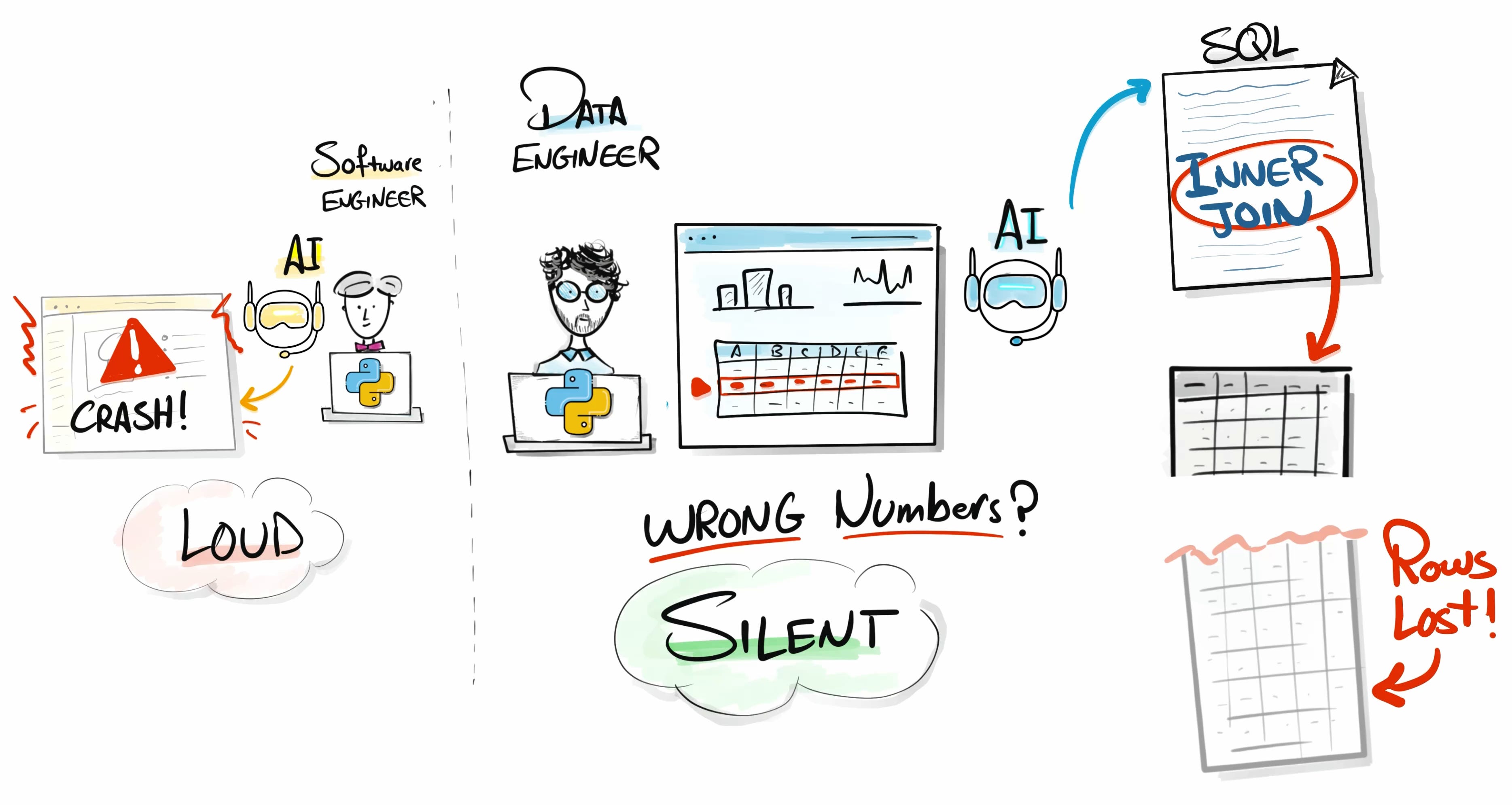
Wrong data fails silently. No crash, no red, just a wrong number in a real decision.
Your whole platform runs on trust, and once people stop trusting the numbers, it is very hard to win them back.
Looks right and is right are two very different things.
AI gives you speed, but it can’t tell you if the answer is actually true.
So …
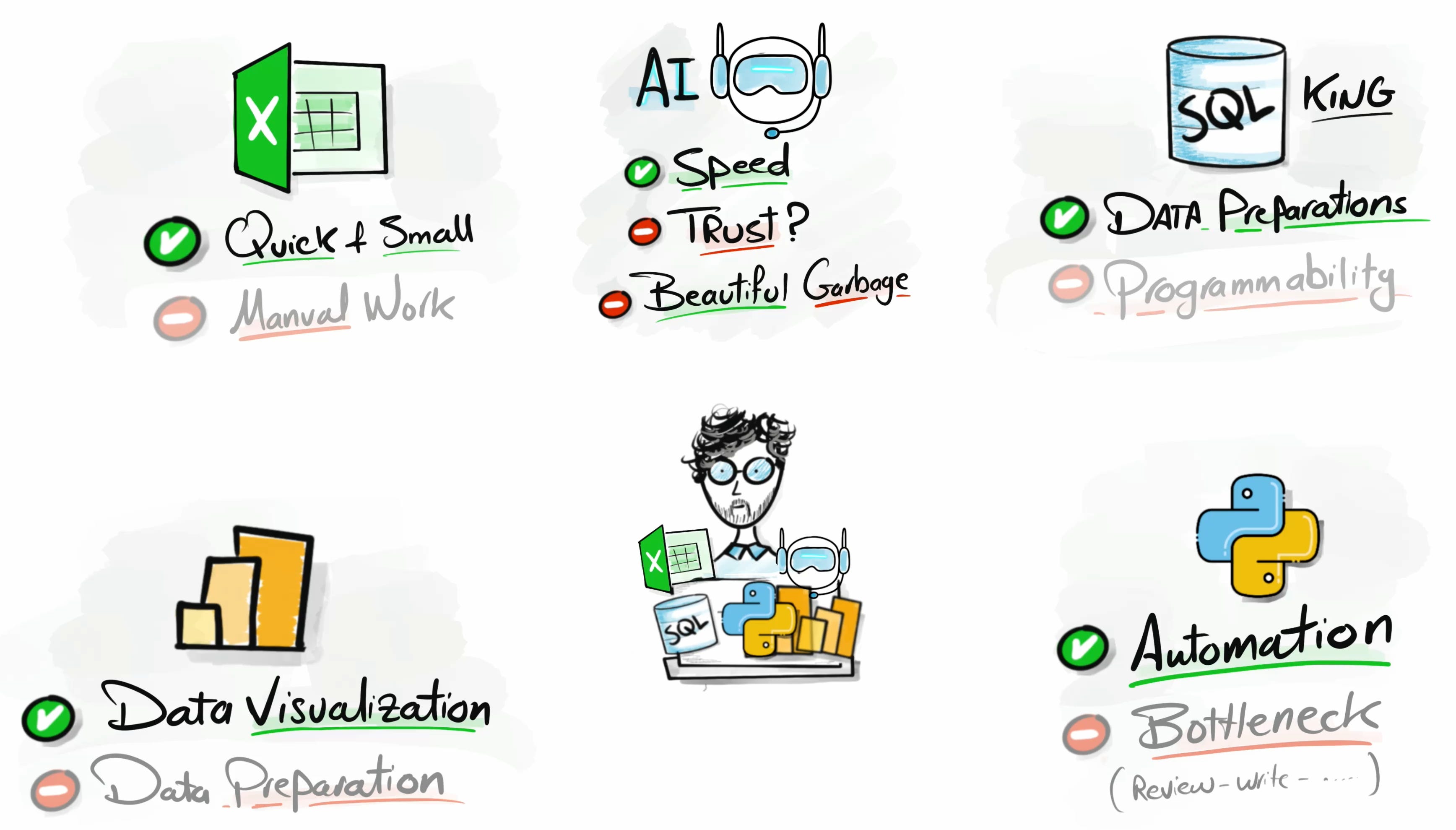
Step back and look at the whole thing, and two things become clear.
First, nothing here ever died. Each tool is still the best at one job.
Excel for a small, quick question.
Power BI for dashboards and sharing.
SQL for the one truth underneath.
Python for everything around the table.
AI for speed on top of all of them.
Second, the pattern. Every tool solved the pain in front of you and then handed you a bigger one. Excel buried you in manual work, Power BI split the truth, SQL got stuck inside its walls, Python made you the bottleneck, and AI made everything fast but hard to trust. This has been going on for decades. AI is just the newest link, not the end of it.
And in every single chapter, there was one person who knew if the number was right. With AI writing everything in seconds, that person matters more than ever.
AI didn’t make these skills useless. It made you the judge.
So if you’re starting today, don’t try to learn five things at once. Start with SQL, it is the heart. Then add Python for everything around it. Excel and Power BI you’ll pick up on the way. Then put AI on top, to go faster, while you stay the judge.
The tools change. The pattern doesn’t.
If you want the full story with all the sketches and animations, the video is on YouTube.
Thanks for reading ❤️
Baraa
Also, here are 4 complete roadmap videos if you’re figuring out where to start:
📌 Data Engineering Roadmap
📌 Data Science Roadmap
📌 Data Analyst Roadmap
📌 AI Engineering Roadmap

Hey friends —
Hey, I’m Baraa, a Data Engineer with over 17 years experience, Ex-Mercedes Benz, where I led and built one of the biggest data platforms for analytics and AI.
Now I’m here to share it all through visually explained courses, real-world projects, and the skills that will get you hired. I’ve helped millions of students transform their careers.
Great framing. The “silent failure” point on AI is the most underrated risk in the industry right now
Clear and concise awesome