

Hey friends, Happy Tuesday!
Let me be honest with you. Most people are stuck in the first phase of AI. You open Claude or ChatGPT, ask a question, get an answer, and that is it.
And the moment you try to go one step deeper, you hit a wall of scary words.
AI agents. Sub-agents. LLM. MCP. Context engineering. Loop engineering. Skills. ReAct.
These words scare people. They stop them from ever reaching the real power of AI.
I am going to take one boring thing I do every morning and hand it to the AI, one step at a time. Every step needs one new idea, and that idea is the scary word. So the buzzwords are not the topic. Each one is just the tool that unlocked one more step.
The task: my morning emails, all by hand
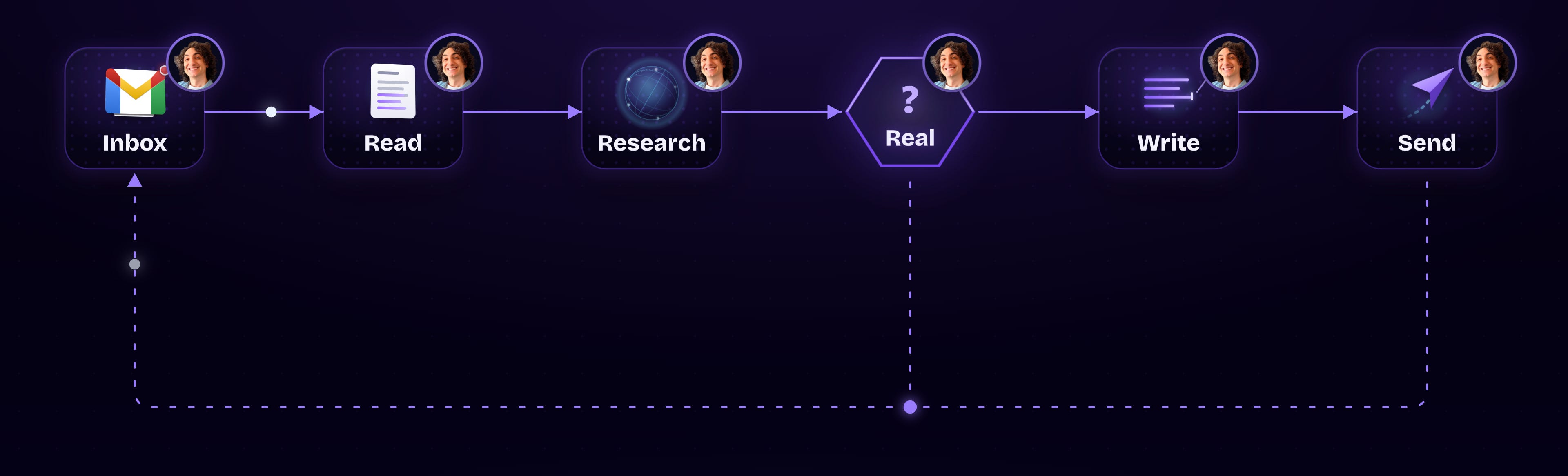
Every morning after making my coffee, I open my inbox and hunt for sponsor offers. I am a content creator now, and this is real money for the channel.
But not every offer is real. I get a lot of fake AI sponsors from websites created like last week. So before I reply, I run the same little investigation every time:
Read the offer.
Check if the company is even real, and look at their website.
Check if my name is spelled right.
Look up the person on LinkedIn.
Then decide, reply or skip. If it is real, write a clean reply and send.
Then the next one, and again, and again. At the start I got two or three a day. Now I get around 200 emails a day, and this eats about half an hour every morning.
And here is the thing. It is really boring. Some days I skip it, and then I either drown the next day, or I miss a real sponsor and lose it.
If you repeat the same judgment every morning, that is exactly the task to hand to AI.
Let the AI write the reply
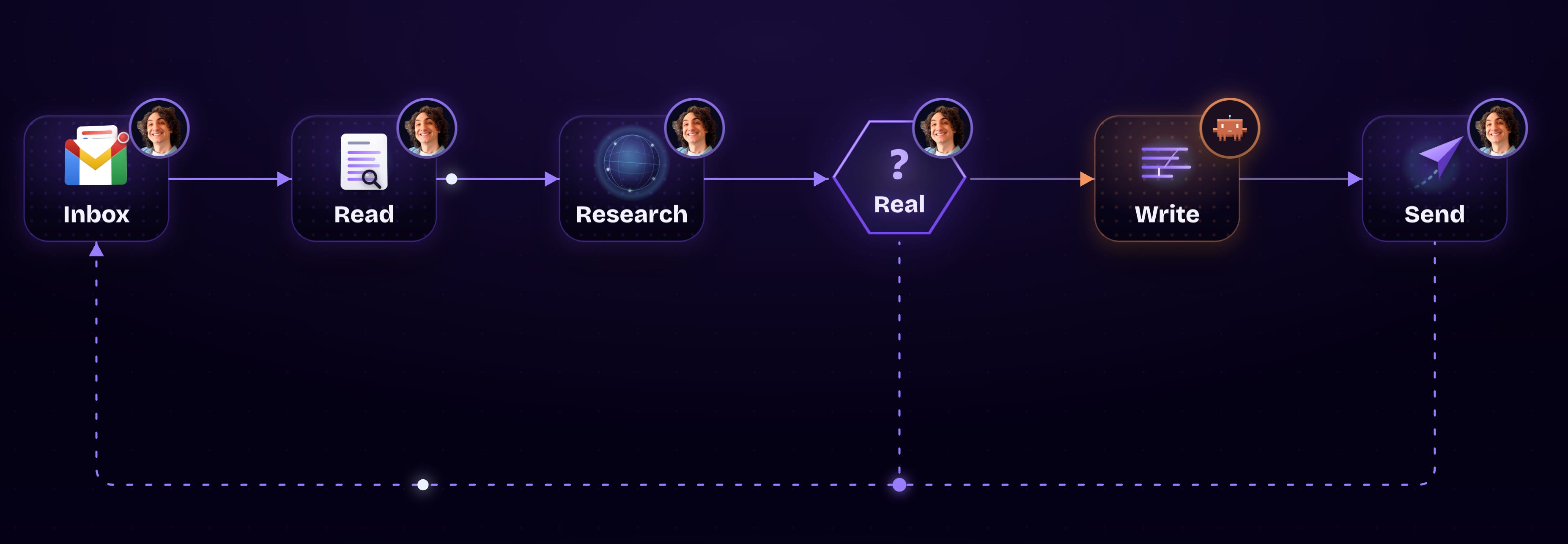
So I pick the easiest step first, the writing.
I copy the sponsor email, drop it into Claude, and ask for a reply. Behind that chat window is an LLM, a large language model. It read a massive amount of public text, books, websites, code, to do one thing: predict the next word. That is why it is so good at a first draft.
But the draft is never perfect. So I push back, make it shorter, friendlier, then copy it back into Gmail, do the last touch, and send. One step is off my plate, but I am still the middleman copying between two windows.
A chatbot can write for you. It cannot yet work for you.
AI is reshaping analytics engineering, but organizations continue to face challenges around trust, governance, and cost management. Drawing on insights from hundreds of analytics and data professionals, this report examines the trends, priorities, and practices defining the next generation of data teams. Read the dbt Labs report
The research that eats my morning
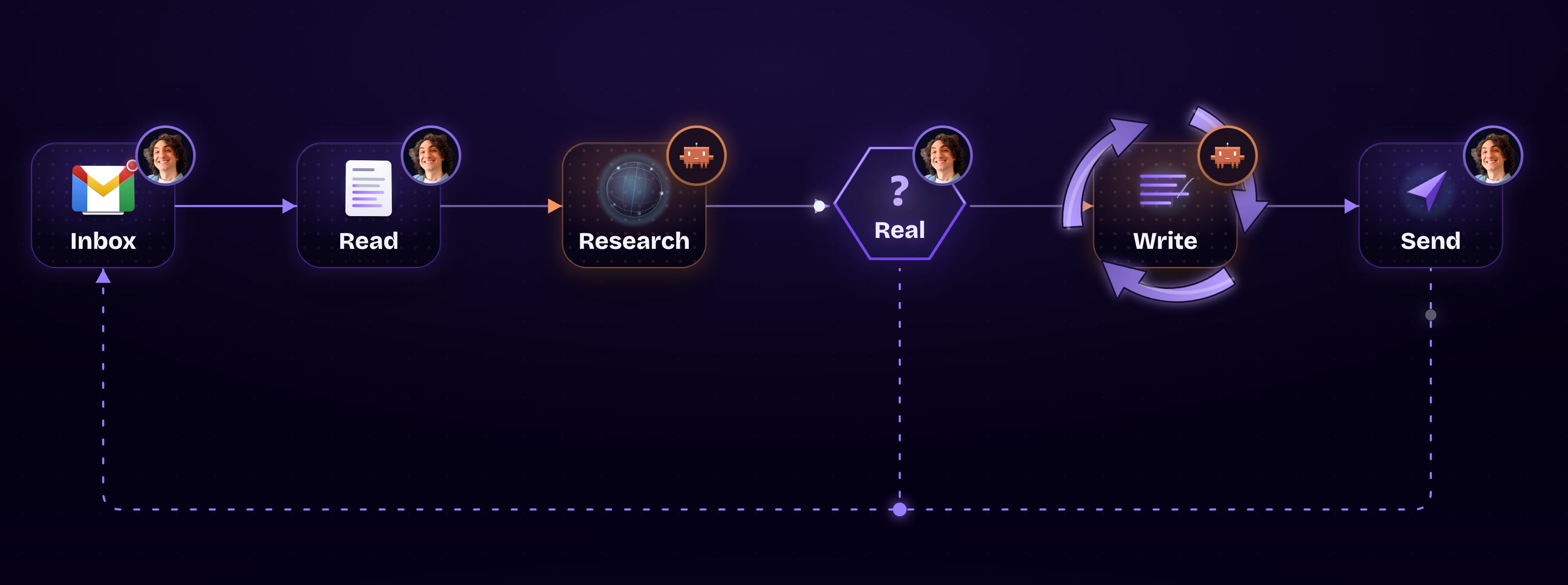
The real time sink is not the writing. It is the research. Googling the company, checking LinkedIn, opening their website.
So I ask the AI instead. Do you know this company? Are they legit? For an old, well known company I get a good answer. But for one that started two weeks ago, the AI answers with full confidence and it is completely wrong. You google it yourself, get a different story, and this is the moment people say the AI is lying.
But it is not lying. This is a hallucination, when the AI sounds completely confident but is wrong. It has no intent, it just fills the gap with a guess. And there is a reason for the gap. Every model has a knowledge cutoff, it only learned up to a certain date, so a website made last week does not exist for it.
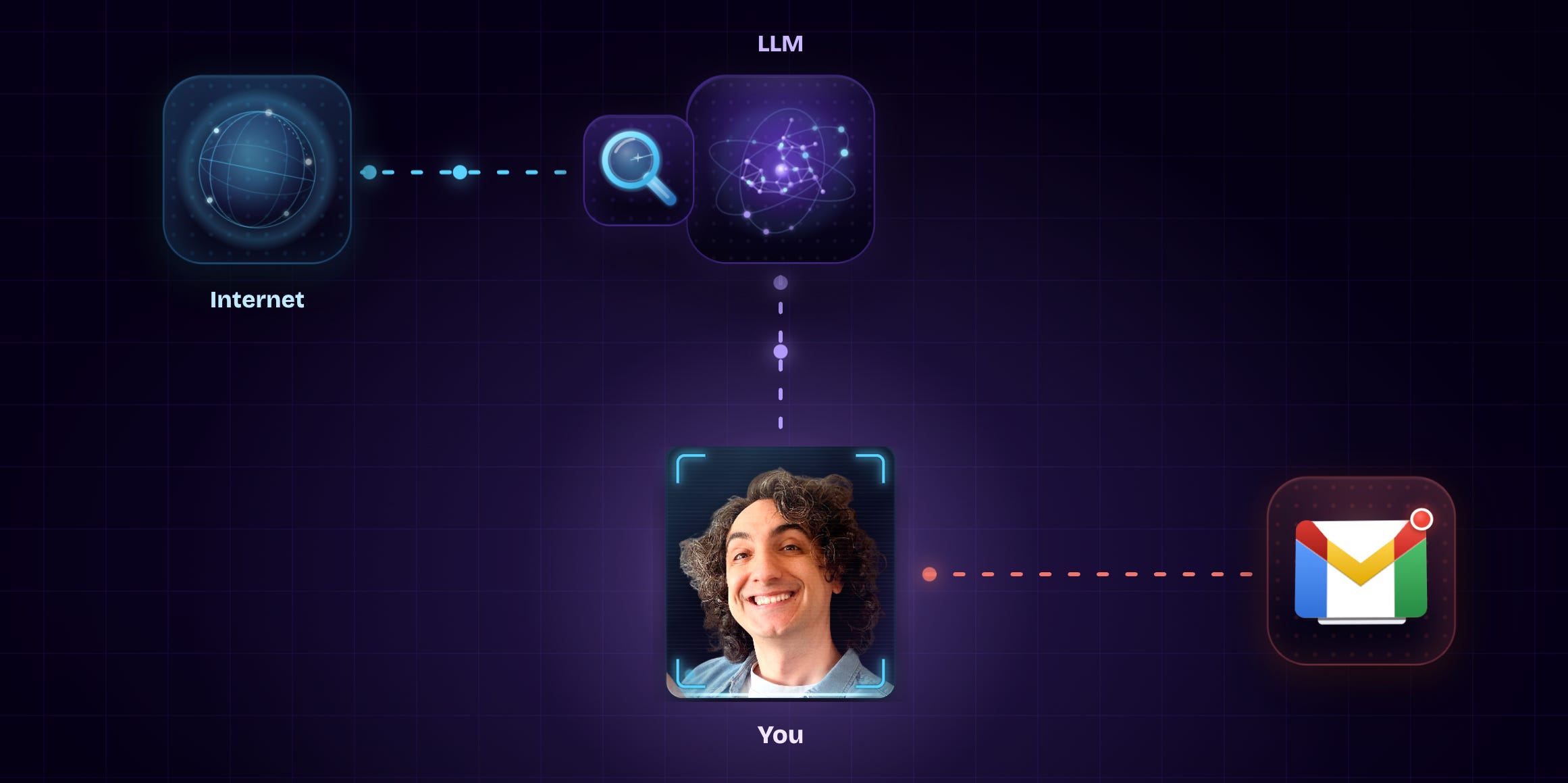
So how do we fix this? We give the model tools. A tool lets the AI do something outside its own head, and the famous one is web search. Now it has hands.
Without tools, the AI guesses from old memory.
With tools, it reads the real website, checks the domain age, and comes back with facts.
The AI is not smarter because it sounds confident. It is smarter when it can go and check.
Let it into my inbox
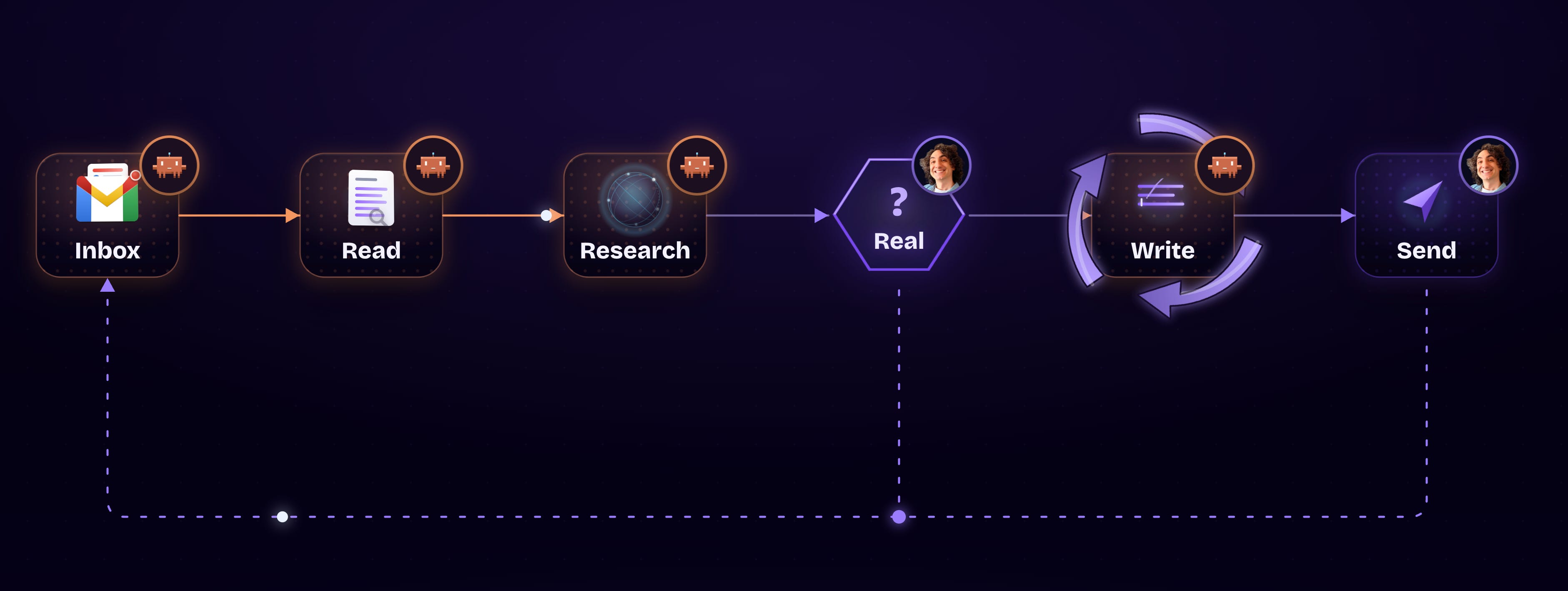
Now the AI can write and research. But I am still the delivery person, carrying text between Gmail and the chat, one email at a time. With hundreds of emails, that is painful.
So I give it real access to my inbox. And this is exactly where people freeze. No way. I am not letting AI walk into my emails. It might send junk in my name, or delete something important.
I understand that fear completely. But it is not as scary as you think, because of one word: control.
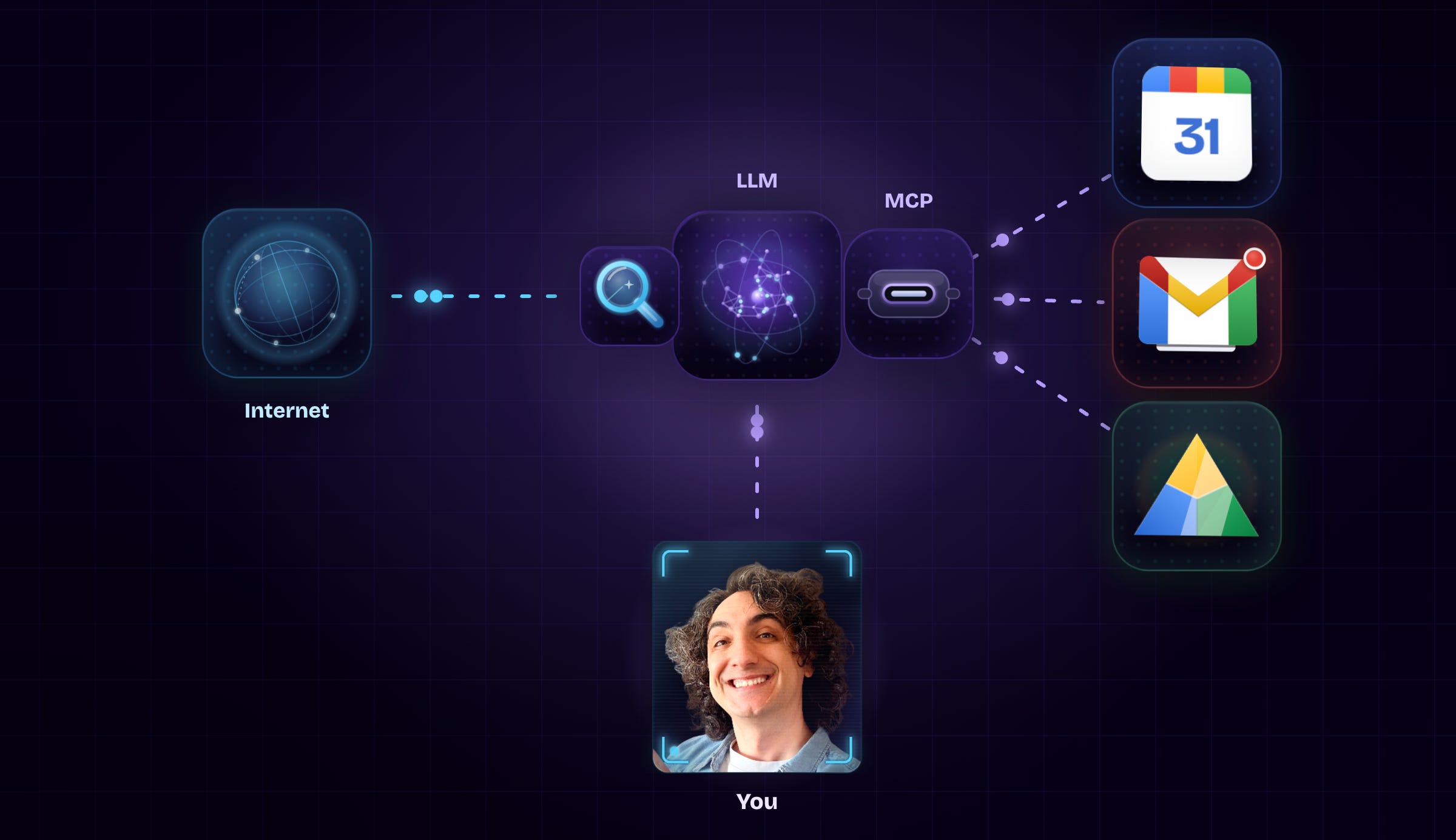
The AI connects to your apps through MCP, the Model Context Protocol. Think of it like USB-C for AI, one safe standard connector. And here is the part that matters. The model never touches your inbox. It only sends a request, and your app decides if that request is allowed:
Read only if you are nervous.
Read and draft, but never send.
Block delete completely.
Keep the final Send button for yourself.
If the model tries to delete and you only allowed reading, Google says no. Once it is connected, I hand it the whole routine in one prompt: open the latest emails, keep the sponsors, research each one, summarize, draft a reply, next. That fixed list of steps has a name, a workflow. No decisions yet, just a recipe it runs end to end.
Connecting AI to your apps is not giving up control. It is defining control clearly.
The moment it becomes an agent
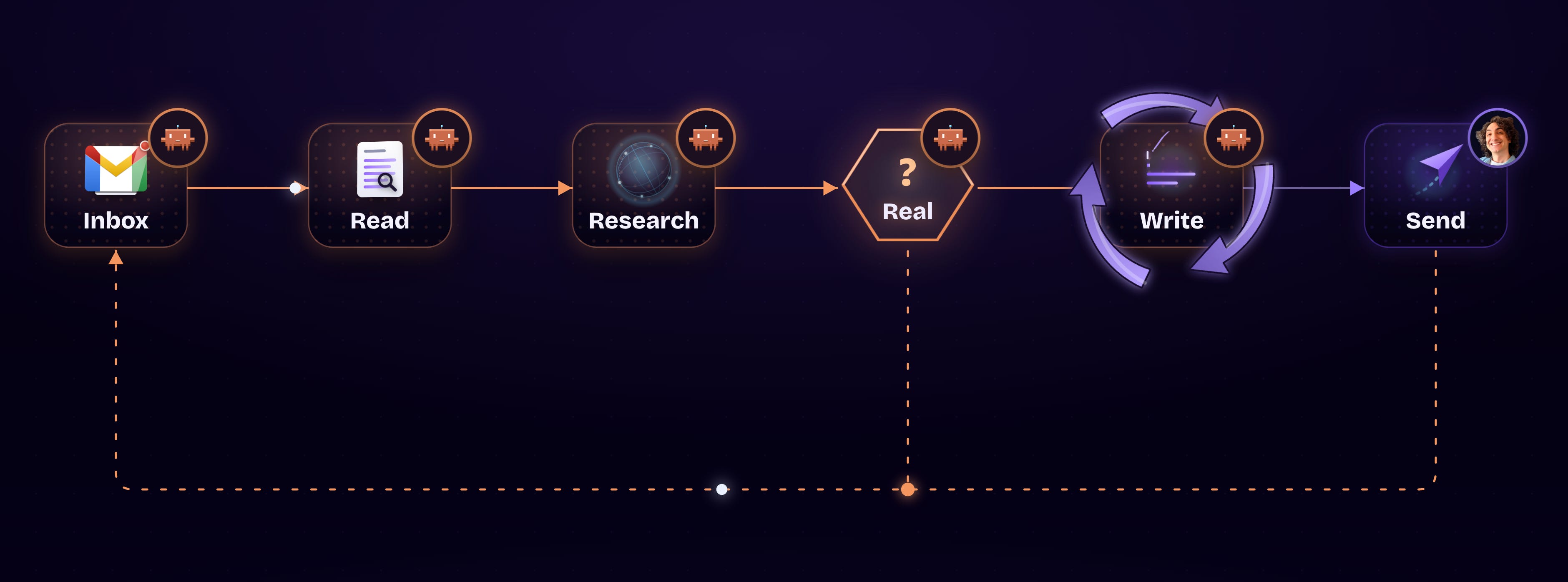
Now the workflow gives me a summary and a draft for every email. But with 100 emails, I get 100 drafts, and I still read them one by one and decide. So the decision is still on me.
So now I hand over the judgment itself. This is the important jump, because this is the moment the chatbot turns into an agent.
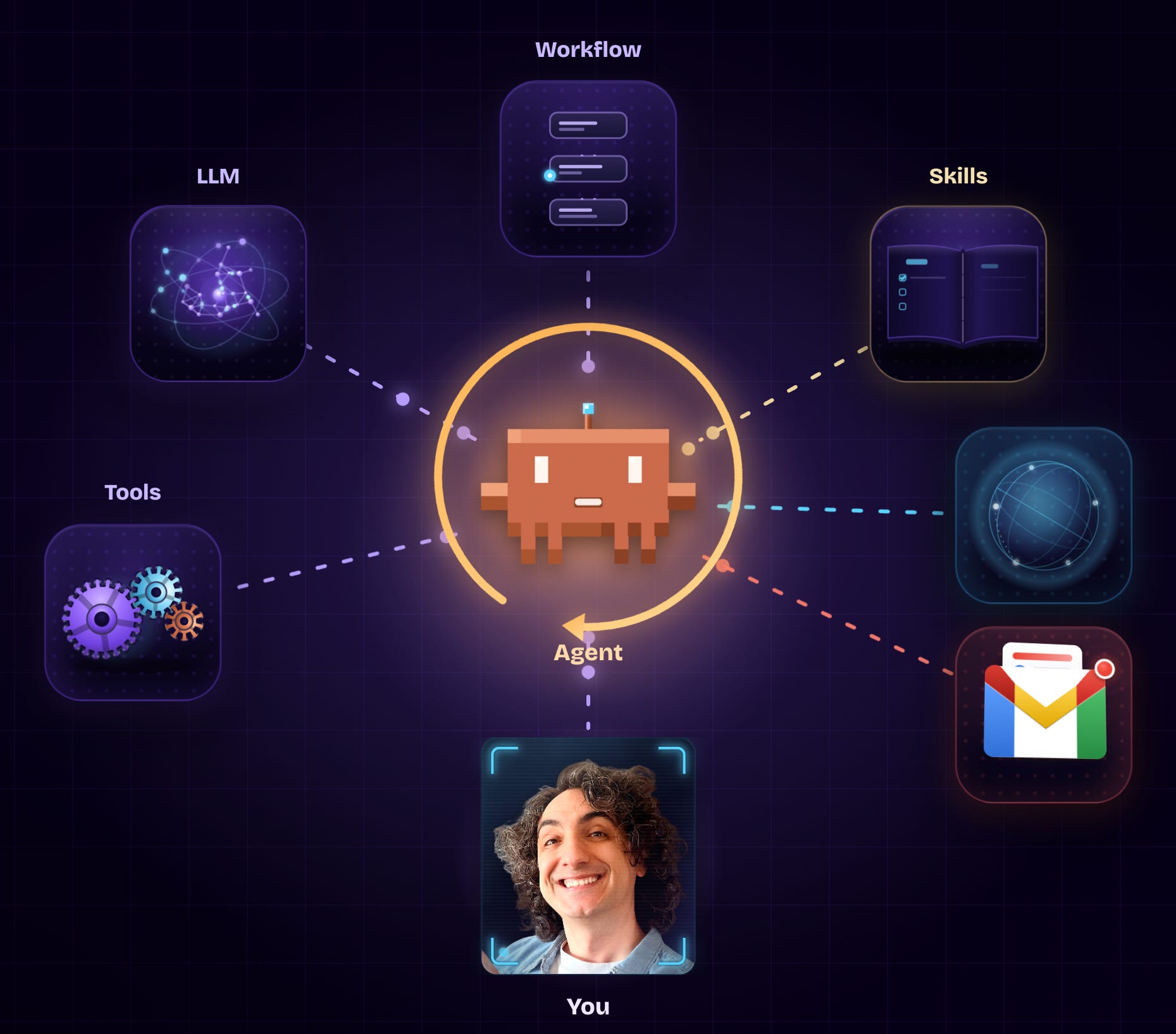
To do it, I build a skill. A skill is just my know-how written down once, my rules, my style, saved so the model can read it. Like explaining to a new person exactly how you decide. Now the AI runs the same checks I do by hand, and decides my way every time.
Put it all together, the LLM, the tools, the workflow, and the skill that decides like me. That is an AI agent. The moment the model can choose, skip, decide, and act on its own, it becomes an agent. Its loop has a fancy name, ReAct: it thinks, does it, looks at the result, and thinks again, until the job is done.
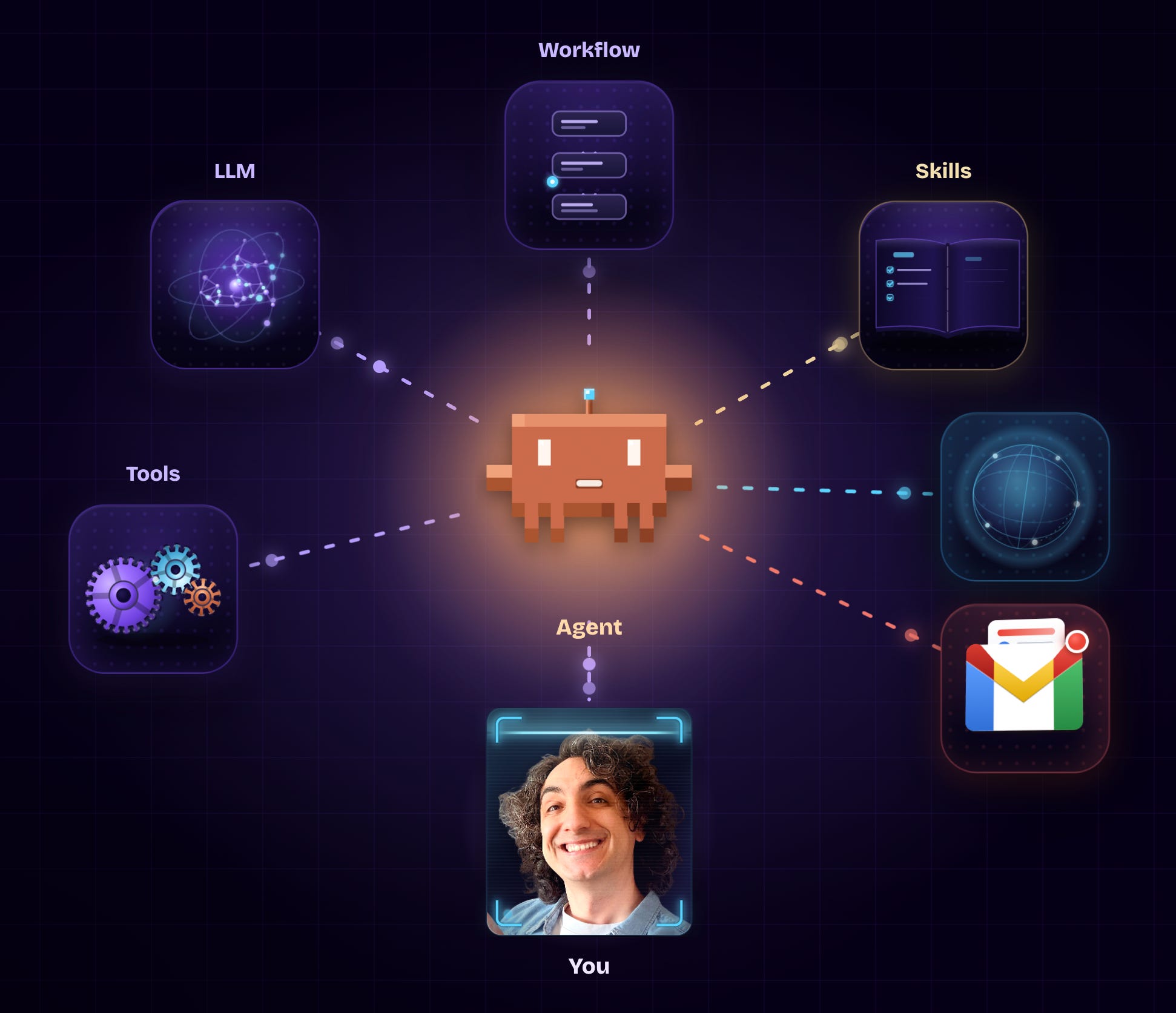
Not a robot with feelings. Just a model in a loop, using tools, following your rules, choosing the next step.
A chatbot answers. A workflow follows. An agent decides what to do next.
Make it sound like me
Now the agent decides like me. But the replies still do not sound like me. Too polished, too generic. So I need a second skill, this time for my voice.
But I do not write this one by hand. I tell the AI to read hundreds of my old sent emails and learn how I open, how I close, my tone, the words I use. Then it bundles all of that into a skill on its own. Now I have two skills, one for the judgment and one for my voice.
And one warning. More skills means more context, and more is not always better. Overload the AI and it gets distracted. Giving it exactly the right context and no junk, that is context engineering.
But there is still a problem. Over time the AI drifts and stops following my voice. So I tell it to reread the skill, it apologizes, fixes it, and I am back to babysitting. That is exhausting.
The fix is a self-check loop, what people call loop engineering. Instead of handing me the draft, the agent rereads its own draft against my voice skill first. If something is off, it rewrites, then checks again, until it truly sounds like me. Only then does it reach me. In Claude you just type /loop to get this.
The real unlock is not an AI that writes. It is an AI that checks its own work before you ever see it.
From one worker to a team
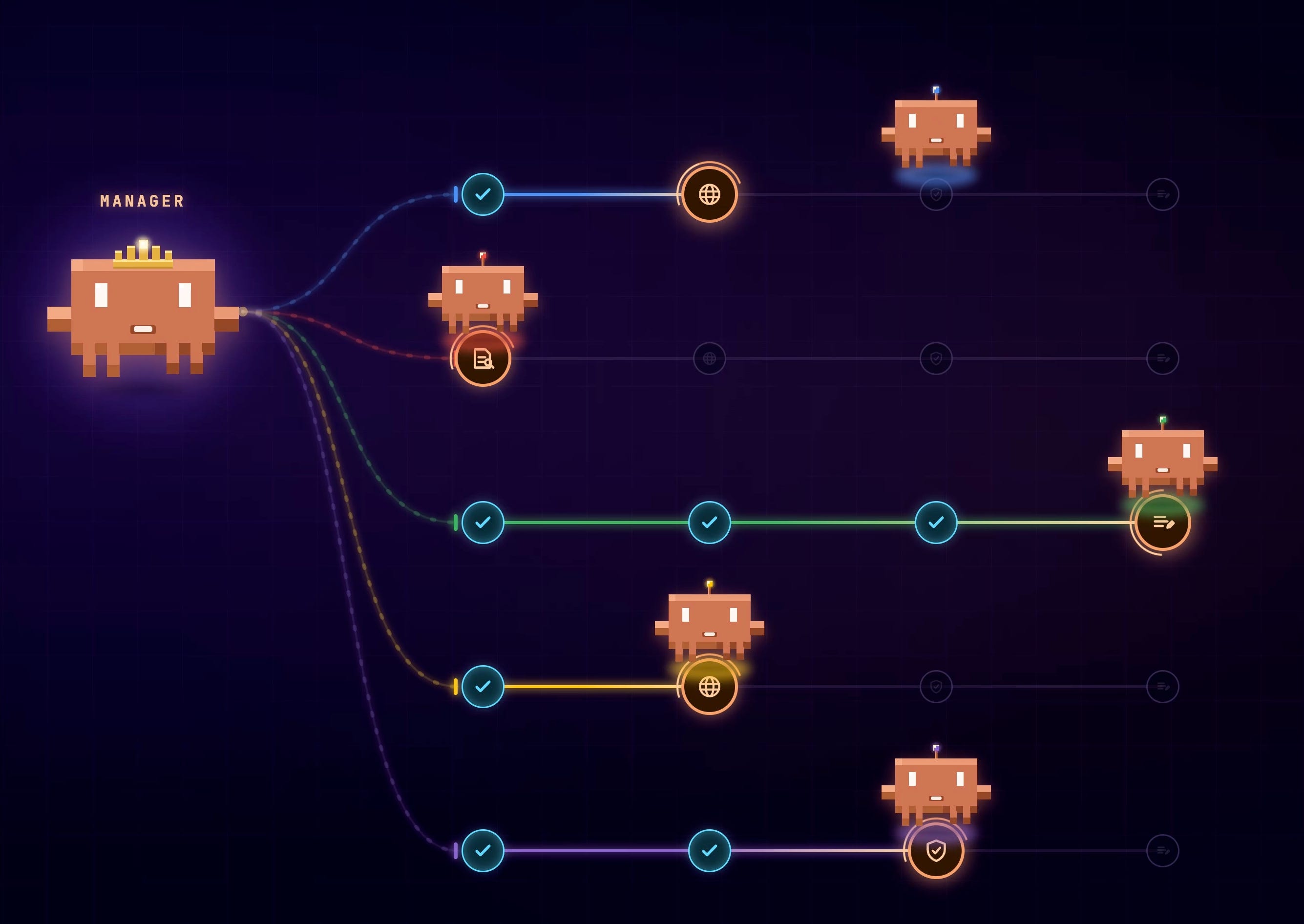
By now the whole system works. But with hundreds of emails, one agent going through them one by one takes about half an hour. I want this in one or two minutes.
So I stop using one agent and build a team. I promote that one agent to be a manager. And like any real manager, it does not do the work itself. It slices the inbox and hands each slice to a helper, a sub-agent.
Each sub-agent is a full agent. It reads, researches, and drafts, but only for its own slice, with no idea about the others. So they all run in parallel, report back, and the manager combines everything into one answer for me.
Nothing here got smarter. It just got faster. Half an hour becomes two minutes. When I was testing Fable 5, I launched around 200 agents at once to optimize my website. Very expensive, but honestly very cool.
The AI did not get smarter here. It just got faster, because the work could be split.
And now it runs without me
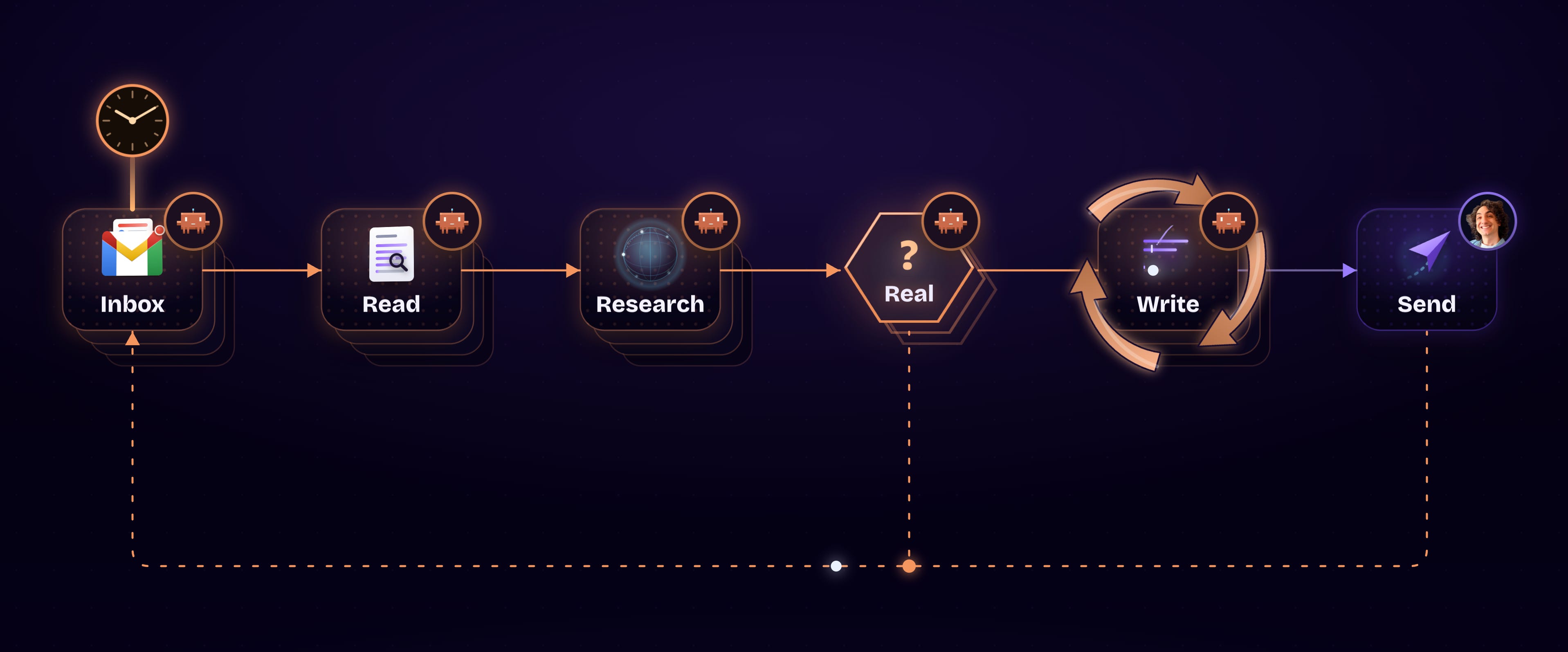
The last touch is simple. Right now I still open my Mac every morning and tell it to start. But I do this every day, so why start it by hand?
So I add a schedule inside Claude, a trigger that runs at the same time every day. It checks the inbox, researches, decides, writes like me, checks its own work, and prepares everything in the background. My PC does not even have to be on.
And here is my one line. I automated everything except the last step. I kept Send for myself. Sometimes I just do not feel like working with a certain sponsor, or I want the final look. Automation does not mean removing every human decision. That last call stays with me.
Automating the boring part is the goal. The final judgment is the part worth keeping.
So …
I took one boring routine and handed it over, one step at a time. And every buzzword that used to scare me was just the tool that unlocked the next step.
LLM let it write the first draft.
Tools and web search stopped the hallucinations with fresh facts past its knowledge cutoff.
MCP connected it to my inbox safely, on my rules, and the workflow gave it the steps.
A skill taught it to decide like me, and that is when it became an agent running its ReAct loop.
A second skill made it sound like me, and loop engineering made it check its own work.
Sub-agents turned one worker into a team, half an hour down to two minutes.
A schedule made it run on its own.
But one thing never changed. I stayed the judge. The AI reads, researches, decides, writes like me, and checks itself, and I still keep the final Send. You stop being the one doing every repetitive step, and become the one who designs the process and judges the result.
AI did not take my skill away. It moved my skill into the rules, the checks, and the final call.
So here is my one move for you. Do not start with the buzzwords. Start with one boring task you repeat every day. Write down the steps, automate the easiest one, then add one upgrade at a time. That is how the scary words stop being scary.
If you want the full story with all the sketches and animations, the video is on YouTube.
Thanks for reading ❤️
Baraa
Also, here are 4 complete roadmap videos if you’re figuring out where to start:
📌 Data Engineering Roadmap
📌 Data Science Roadmap
📌 Data Analyst Roadmap
📌 AI Engineering Roadmap

Hey friends —
Hey, I’m Baraa, a Data Engineer with over 17 years experience, Ex-Mercedes Benz, where I led and built one of the biggest data platforms for analytics and AI.
Now I’m here to share it all through visually explained courses, real-world projects, and the skills that will get you hired. I’ve helped millions of students transform their careers.
I like your process; it definitely helps one let their guard down... & let AI
Thanks.
The "I kept Send for myself" line is the real lesson here. I run scheduled Claude agents every day, and the part that breaks first is never the drafting, it's trusting the decide-like-me step too early. The self-check loop against a voice skill is what finally made mine usable.